
Loading
Cartoon MangoCartoon Mango
Contact Us
LOGISTICS AISUPPLY CHAIN22 MIN READFEB 2026

How to Build AI-Powered Logistics and Supply Chain Automation for India

Quick Answer

AI logistics automation reduces delivery costs by 25% and improves on-time delivery by 35%. Route optimization cuts total kilometers by 30%, warehouse AI achieves 99.5% pick accuracy, and fleet utilization jumps from 62% to 84%. Development costs Rs 12 lakh to Rs 2 crore with a 16-week implementation timeline for Indian logistics companies.

Indian logistics companies lose 15-25% of revenue to inefficient routing, manual dispatch, and poor fleet utilization. With 22 billion parcels shipped annually and growing 20-25% year-over-year, the companies that adopt AI-powered route optimization, warehouse automation, and predictive fleet management will dominate. This guide covers how to build each module, India-specific challenges (address ambiguity, traffic chaos, monsoon routing), costs, timelines, and ROI.

25%
Lower Delivery Cost
35%
Better On-Time Delivery
Rs 12-60L
Development Cost
16 Weeks
To Production
AI Applications

8 AI Applications for Logistics Automation

AI Route Optimization

25-35% reduction in total km driven

Demand Forecasting

30-40% fewer stockouts

Warehouse Automation

30-40% faster picking

Last-Mile Delivery

25-30% lower last-mile cost

Fleet Management

35% better fleet utilization (62% to 84%)

Cold Chain Monitoring

50-60% reduction in spoilage

Supply Chain Visibility

Real-time visibility across 100% of shipments

Returns and Reverse Logistics

30-40% lower reverse logistics cost

AI Route Optimization

Vehicle routing with traffic prediction, multi-stop optimization, and dynamic re-routing. Solves capacitated VRP with time windows using Google OR-Tools and custom heuristics.

IMPACT: 25-35% reduction in total km driven, 20-30% fuel savings
TECH USED: Google OR-Tools, OSRM, MapMyIndia API, XGBoost for traffic prediction
India-Specific

6 India-Specific Logistics Challenges and AI Solutions

Address Ambiguity

30% of Indian addresses lack pin-level accuracy. No standardized format, missing house numbers, landmark-based directions common in tier-2/3 cities.

Our Solution: Google Plus Codes and What3Words integration for precise geocoding. Landmark-based fuzzy matching engine trained on 10M+ Indian deliveries. Driver app auto-captures GPS coordinates on successful delivery for future reference.

Traffic Unpredictability

Indian roads have 2-3x more traffic variability than Western markets. Unpredictable diversions, bandh/strike closures, monsoon flooding, and city-specific peak hours.

Our Solution: City-specific traffic ML models trained on 12+ months of GPS data. Real-time re-routing with Google Maps and MapMyIndia APIs. Monsoon mode with flood-prone area avoidance. Festival and bandh calendar integration for proactive planning.

Multi-Modal Transport

Inter-city shipments often require road-to-rail-to-last-mile transitions. Each mode has different cost structures, timelines, and booking systems.

Our Solution: Unified multi-modal optimizer that evaluates road, rail, and air options for each shipment. Cost-time-reliability tradeoff engine. Automated booking across Indian Railways Parcel, road transport, and air cargo APIs.

Seasonal Demand Spikes

Diwali/Navratri drives 3-5x normal volume. E-commerce sales (BBD, AIFEST) create 5-8x spikes. Monsoon disrupts North/East India routes for 3-4 months.

Our Solution: Festival-aware demand forecasting with Indian calendar modeling. Auto-scaling infrastructure for peak load. Pre-positioned inventory based on regional festival demand. Monsoon contingency routing with alternate road/rail paths.

Regulatory Compliance

E-way bills mandatory for inter-state goods movement above Rs 50,000. GST documentation, FSSAI for food transport, hazmat regulations, vehicle permits vary by state.

Our Solution: Automated e-way bill generation via NIC API. GST-compliant invoice generation. FSSAI temperature log documentation for food/pharma. State-wise vehicle permit tracking and renewal alerts.

Language Diversity

Drivers across India speak Hindi, Tamil, Telugu, Kannada, Bengali, Marathi, and other regional languages. English-only apps see 40-60% lower adoption.

Our Solution: Driver app with full localization in 8+ Indian languages (Hindi, Tamil, Telugu, Kannada, Bengali, Marathi, Gujarati, Malayalam). Voice-guided navigation in regional languages. Visual-first UI design with minimal text for low-literacy users.
Architecture

6-Layer Logistics AI Architecture

IoT and Data Collection

GPS modules, NB-IoT/4G sensors, MQTT, RFID readers, React Native
GPS trackers (vehicle real-time location)Temperature and humidity sensors (cold chain)Barcode and RFID scanners (warehouse)OBD-II vehicle telemetry (fuel, engine health)Driver mobile app (delivery status, POD capture)
ROI

Before vs After: Logistics Performance Impact

MetricBefore (Manual)After (AI Automation)Improvement
Delivery Cost Per OrderRs 85Rs 64-25%
On-Time Delivery Rate72%97%+35%
Route EfficiencyManual planningAI optimized-30% km
Warehouse Pick Accuracy94%99.5%+6%
Fleet Utilization62%84%+35%
Fuel Consumption12L/100km9.5L/100km-21%
Delivery Attempts (Avg)1.41.1-21%
Customer Complaints8%2.5%-69%
Pricing

Cost Breakdown by Scale

TierScaleCostIncludesTimeline
Single ModuleRoute OR Warehouse OR FleetRs 12-25 LakhOne AI module (e.g., route optimization), basic dashboard, carrier integration, mobile app for drivers8-10 weeks
Multi-Module Platform2-3 Integrated ModulesRs 25-60 LakhRoute optimization + warehouse AI + fleet tracking, dispatch dashboard, customer tracking, multi-carrier support14-16 weeks
Enterprise Supply ChainFull End-to-End SystemRs 60L - 2 CroreAll 8 AI modules, IoT infrastructure, SAP/Oracle integration, cold chain, multi-warehouse, e-way bill, custom analytics20-24 weeks
Monthly MaintenanceAny ScaleRs 20-75K/monthModel retraining, API maintenance, infrastructure hosting, IoT device management, feature updates, SLA supportOngoing
Comparison

Custom AI vs Locus vs FarEye vs Global Platforms

FeatureCartoon Mango (Custom AI)LocusFarEyeGlobal (Project44, FourKites)
Custom Algorithm DesignFully custom VRP solvers tuned for your fleet and constraintsPre-built optimization, configurable parametersConfigurable workflows, limited algorithm customizationStandard VRP solvers, enterprise customization (expensive)
India Address HandlingPlus Codes, What3Words, landmark geocoding, 95%+ accuracyGood India geocoding, Google Maps basedStandard geocoding, some India optimizationPoor India address handling, Western-centric
Multi-Modal TransportRoad + rail + air optimization in single engine, intermodal handoffsPrimarily road-focused last-mileRoad-focused with some multi-modal visibilityStrong multi-modal but no India rail/road specifics
Cost StructureRs 12-60L one-time + Rs 20-75K/month maintenanceRs 1-5 per order (Rs 2-8L/month at scale)Rs 1.5-6L/month recurring SaaS$2000-10,000/month recurring
Integration DepthDeep bi-directional SAP/Oracle/custom TMS, e-way bill, VAHAN APIStandard API integrations, carrier connectionsGood carrier integrations, standard ERP connectorsStrong ERP but limited India carrier/compliance
Real-Time OptimizationSub-second re-routing, dynamic dispatch with live trafficReal-time tracking, periodic route optimizationReal-time visibility, rule-based dispatchStrong real-time but high latency for India data
Cold Chain SupportFull IoT integration, predictive alerts, FSSAI complianceBasic temperature monitoringVisibility only, no predictive cold chainGood cold chain but no FSSAI/India compliance
Ongoing SupportDedicated team in Bangalore/Coimbatore, same-timezone supportIndia support team, tiered SLAIndia support, standard SaaS SLAUS/EU support hours, expensive India support
Timeline

16-Week Implementation Roadmap

Weeks 1-2

Data Audit and Process Mapping

  • Audit existing logistics data (order history, route logs, GPS data, delivery records)
  • Map current workflows — dispatch, routing, warehouse operations, delivery process
  • Identify data gaps and IoT sensor requirements (GPS trackers, temperature sensors)
  • Define KPIs and success metrics (cost per delivery, OTD rate, fleet utilization)
  • Document integration requirements with existing TMS/WMS/ERP systems
Data quality reportProcess flow diagramsIoT hardware specificationKPI baseline document
Weeks 3-4

Algorithm Design and Architecture

  • Design route optimization algorithm (VRP variant selection for your fleet constraints)
  • Architect data pipeline for real-time GPS, sensor, and order data streaming
  • Design system architecture — microservices, APIs, database schema, ML pipeline
  • Select and configure cloud infrastructure (AWS/GCP) with edge computing plan
  • API specification for TMS/WMS/carrier integrations (Delhivery, DTDC, BlueDart)
Algorithm design documentSystem architecture diagramAPI specificationsInfrastructure blueprint
Weeks 5-10

Core AI Development

  • Build route optimization engine with India-specific constraints (traffic, addresses, vehicle restrictions)
  • Develop demand forecasting models for shipment volume prediction by region
  • Build dispatch algorithm with real-time driver assignment and delivery clustering
  • Develop warehouse AI module — pick-path optimization, slotting, labor planning
  • Create fleet management dashboard with predictive maintenance and fuel analytics
  • Build driver mobile app (React Native) with navigation, POD capture, regional language support
Route optimization engineDemand forecasting modelDispatch systemWarehouse AI moduleDriver mobile app
Weeks 11-14

Integration and IoT Setup

  • Integrate with existing TMS/WMS (SAP, Oracle, or custom) — bi-directional data flow
  • Connect carrier APIs (Delhivery, DTDC, BlueDart, Ecom Express) for tracking and rates
  • Deploy IoT sensors — GPS trackers on vehicles, temperature sensors for cold chain
  • Integrate e-way bill API for GST compliance on inter-state shipments
  • End-to-end testing with real order data, load testing for peak season capacity (3-5x)
All integrations liveIoT sensors deployedE-way bill complianceLoad test results
Weeks 15-16

Pilot and Go-Live

  • Pilot AI routing on 10-15% of routes, compare AI vs manual performance
  • Validate ETA accuracy, delivery cost reduction, and fleet utilization improvement
  • Train operations team on dispatch dashboard, driver team on mobile app
  • Gradual rollout — expand from pilot routes to 50%, then 100% over 2 weeks
  • Set up monitoring, alerting, and weekly performance review process
Pilot performance reportTeam training completedFull production deploymentMonitoring dashboard live

Get Free Logistics AI Assessment

We will analyze your delivery data, map optimization opportunities across routing, warehousing, and fleet management, estimate cost savings, and provide a custom AI architecture roadmap — free of charge.

Book Free Assessment

Related Services

AI Automation for LogisticsLogistics AIPredictive AnalyticsInventory ManagementGeolocation ServicesAI/ML Solutions Bengaluru

Related Insights

Demand Forecasting GuideNode.js Backend GuideB2B Platform GuideReact Native Guide

Frequently Asked Questions

Common questions about AI automation for AI logistics and supply chain automation

  • What is AI logistics automation and how does it work?

    AI logistics automation uses machine learning algorithms to optimize every stage of the supply chain — from route planning and warehouse operations to last-mile delivery and demand forecasting. The system ingests real-time data from GPS trackers, IoT sensors, TMS/WMS platforms, and traffic APIs, then applies optimization algorithms (vehicle routing problem solvers, demand forecasters, anomaly detectors) to make decisions that previously required manual effort. For Indian logistics companies, AI addresses critical pain points: address ambiguity (30% of Indian addresses lack pin-level accuracy), unpredictable traffic (Indian roads have 2-3x more variability than Western countries), and multi-modal complexity (road + rail + last-mile combinations). The result: 25-35% lower delivery costs and 30-40% improvement in on-time delivery rates.

    toggle
  • How much does AI logistics automation cost in India?

    AI logistics automation development costs in India: Single module (route optimization OR warehouse AI OR fleet tracking): Rs 12-25 lakh. Multi-module platform (2-3 modules integrated): Rs 25-60 lakh. Enterprise supply chain system (end-to-end with IoT, all modules, ERP integration): Rs 60 lakh to Rs 2 crore. Monthly maintenance: Rs 20,000-75,000 depending on scale. Compare to SaaS: Locus (Rs 2-8 lakh/month), FarEye (Rs 1.5-6 lakh/month), global platforms like Project44 or FourKites ($2000-10,000/month). Custom development is cost-effective when you process 5,000+ orders/day or need India-specific address handling, multi-modal routing, or deep ERP integration. Indian development costs are 50-65% lower than US/Europe.

    toggle
  • How long does it take to build a logistics AI system?

    Typical timeline: 16 weeks for a production-ready multi-module system. Phase 1 (Weeks 1-2): Data audit, process mapping, GPS/IoT data analysis. Phase 2 (Weeks 3-4): Algorithm design, architecture planning, API specifications. Phase 3 (Weeks 5-10): Core AI development — route optimization engine, demand forecasting models, dispatch algorithms. Phase 4 (Weeks 11-14): Integration with existing TMS/WMS, IoT sensor setup, carrier API connections (Delhivery, DTDC, BlueDart). Phase 5 (Weeks 15-16): Pilot run on 10-15% of routes, performance validation, go-live. A single module (e.g., just route optimization) can be delivered in 8-10 weeks. Enterprise systems with full IoT infrastructure may extend to 20-24 weeks.

    toggle
  • How does AI route optimization work for Indian road conditions?

    AI route optimization for India goes beyond standard vehicle routing problem (VRP) solvers. Our system accounts for: (1) Real-time traffic from Google Maps and MapMyIndia APIs with Indian traffic pattern learning (peak hours vary by city — Bangalore 8:30-10:30 AM and 5-8 PM, Mumbai Western Express Highway patterns differ from Eastern). (2) Address ambiguity — we use Google Plus Codes and What3Words integration for locations without proper addresses, plus landmark-based geocoding. (3) Road quality data — unpaved roads, narrow lanes, one-ways not on Google Maps, seasonal road closures (monsoon). (4) Vehicle restrictions — truck entry timings (most Indian cities restrict heavy vehicles during day), bridge weight limits, toll optimization. (5) Multi-stop optimization using modified Clarke-Wright savings algorithm and Google OR-Tools, typically reducing total distance by 25-35% vs manual planning.

    toggle
  • What AI features are used in warehouse automation?

    AI warehouse automation includes: (1) Pick-path optimization — ML algorithms determine the shortest picking route through the warehouse, reducing picker travel time by 30-40%. (2) Slotting optimization — AI analyzes order frequency, product dimensions, and co-purchase patterns to determine optimal rack placement. Fast-moving SKUs near packing stations, frequently co-ordered items adjacent. (3) Labor planning — demand forecast drives staffing requirements per shift, per zone. Accounts for Indian factors: festival season surge (3-5x staff during Diwali), monsoon absenteeism patterns. (4) Inventory positioning — multi-warehouse allocation based on regional demand patterns (stock winter apparel heavier in North India warehouses). (5) Quality inspection — computer vision for damage detection, label verification. Development cost: Rs 15-40 lakh depending on warehouse size and automation level.

    toggle
  • How does AI optimize last-mile delivery in India?

    Last-mile delivery is the most expensive segment (40-55% of total logistics cost in India). AI optimization includes: (1) Dynamic dispatch — real-time assignment of orders to delivery partners based on location, capacity, and predicted traffic. Reduces idle time by 25-30%. (2) ETA prediction — ML models trained on Indian traffic patterns achieve 85-90% accuracy for delivery time windows (vs 60-70% for static estimates). (3) Delivery clustering — groups nearby deliveries into optimized batches, reducing per-delivery cost by Rs 8-15. (4) Failed delivery prediction — identifies high-risk deliveries (incomplete addresses, cash-on-delivery in certain areas) and triggers pre-delivery confirmation calls. Reduces failed attempts by 35-45%. (5) Customer slot optimization — offers delivery windows that align with route efficiency, not just customer preference. Indian-specific: handles apartment complex navigation, society gate restrictions, and regional language delivery instructions.

    toggle
  • Can AI logistics integrate with existing TMS and WMS systems?

    AI logistics integrates with all major TMS, WMS, carrier, ERP, and e-commerce platforms — the AI layer sits on top of existing systems with no need to replace your TMS/WMS, and integration typically takes 3-4 weeks. Supported systems include: TMS (SAP TM, Oracle TMS, Ramco Logistics), WMS (SAP EWM, Manhattan Associates, Vinculum, Unicommerce), Carrier APIs (Delhivery, DTDC, BlueDart, Ecom Express, Shadowfax), E-commerce (Shopify, WooCommerce, Magento), ERP (SAP S/4HANA, Oracle ERP, ERPNext, Tally), Maps (Google Maps Platform, MapMyIndia, HERE Technologies), and Government APIs (E-way bill, VAHAN). We read data from your systems, run optimization algorithms, and push decisions back.

    toggle
  • What India-specific challenges does the AI handle?

    Indian logistics has unique challenges that global platforms handle poorly: (1) Address ambiguity — 30% of deliveries have incomplete addresses. We use Plus Codes, What3Words, and landmark-based geocoding to achieve 95%+ geocoding accuracy. (2) Traffic unpredictability — Indian roads have 2-3x more traffic variability than developed markets. Our models train on city-specific patterns including bandh/strike disruptions, festival traffic, and monsoon slowdowns. (3) Multi-modal complexity — a single shipment may use truck (warehouse to hub), rail (inter-city), and bike/tempo (last-mile). AI optimizes the full chain. (4) Cash-on-delivery — 50-60% of e-commerce orders are COD, requiring cash reconciliation and failed delivery handling. (5) Regulatory compliance — e-way bills for inter-state movement, GST documentation, FSSAI for food logistics. (6) Language diversity — driver apps in Hindi, Tamil, Telugu, Kannada, and Bengali for adoption across regions.

    toggle
  • How does AI cold chain monitoring work?

    AI cold chain monitoring combines IoT sensors with ML algorithms: (1) Real-time temperature tracking — wireless sensors (Rs 500-2000 per unit) in vehicles and storage units transmit temperature, humidity, and door-open events every 30-60 seconds via 4G/NB-IoT. (2) Predictive alerts — ML models predict temperature excursions 15-30 minutes before they happen (based on ambient temperature trends, door-open frequency, refrigeration unit performance), giving drivers time to act. (3) Route optimization for perishables — factors in cold storage facility locations, vehicle refrigeration capacity, and delivery time sensitivity. (4) Compliance documentation — automated FSSAI compliance reports, temperature logs for pharma (GDP compliance), chain-of-custody records. (5) Spoilage prediction — estimates remaining shelf life based on temperature history, enabling dynamic pricing for near-expiry goods. Critical for India where cold chain infrastructure gaps cause 30-40% food wastage. Development cost: Rs 20-50 lakh including IoT hardware integration.

    toggle
  • What ROI can logistics companies expect from AI automation?

    Documented ROI from AI logistics implementations: 25% reduction in delivery cost per order (Rs 85 to Rs 64 average). 35% improvement in on-time delivery (72% to 97%). 30% reduction in total kilometers driven (route optimization). 21% reduction in fuel consumption. 35% improvement in fleet utilization (62% to 84%). 69% reduction in customer complaints. For a logistics company processing 10,000 deliveries/day at Rs 85/delivery: AI saves approximately Rs 2.1 lakh/day or Rs 6.3 crore/year in direct delivery costs alone. Add fuel savings, reduced failed deliveries, and better fleet utilization, total annual savings reach Rs 8-12 crore. ROI is typically achieved within 8-12 months. Smaller operations (1,000-5,000 deliveries/day) see ROI in 10-14 months with annual savings of Rs 80 lakh to Rs 3 crore.

    toggle
  • What ongoing maintenance does an AI logistics system need?

    AI logistics systems require Rs 20,000-75,000/month in maintenance covering model retraining, API updates, infrastructure, IoT management, and feature updates — with annual maintenance contracts and SLA guarantees available. Breakdown: (1) Model retraining (Rs 8-20K/month) — route optimization and demand forecasting models retrained weekly/monthly as traffic patterns and demand shift. (2) API maintenance (Rs 5-15K/month) — carrier APIs, maps APIs, and e-way bill APIs update frequently. (3) Infrastructure (Rs 10-25K/month) — cloud hosting, database management, monitoring, and alerts. (4) IoT device management (Rs 5-15K/month if applicable) — sensor battery replacement, connectivity monitoring, firmware updates. (5) Feature updates — new optimization algorithms, additional carrier integrations, dashboard improvements.

    toggle
  • Should we build custom logistics AI or use Locus/FarEye?

    Use Locus/FarEye when: you need quick deployment (2-4 weeks vs 16 weeks for custom), you have standard routing needs with <5,000 orders/day, and you do not need deep customization. Build custom when: (1) You process 5,000+ orders/day — SaaS per-order pricing becomes expensive (Locus charges Rs 1-5 per order; at 10,000 orders/day, that is Rs 3-15 lakh/month vs Rs 20-75K/month for custom maintenance). (2) You need India-specific algorithms — address ambiguity handling, regional traffic modeling, multi-modal optimization that SaaS platforms handle generically. (3) Deep ERP/TMS integration — SAP, Oracle, or custom systems that need bi-directional data flow. (4) Proprietary algorithms — your routing logic is a competitive advantage (e.g., specialized cold chain, hazmat, oversized cargo). (5) Data ownership — custom means 100% control over logistics data and algorithms. Break-even: custom becomes cheaper than Locus at ~8,000 orders/day within 18-24 months.

    toggle

Want to See What We Build with AI Logistics Automation?

Get a free consultation and discover how we can turn your idea into a production-ready application. Our team will review your requirements and provide a detailed roadmap.

  • Free project assessment
  • Timeline & cost estimate
  • Portfolio of similar projects

Your information is secure. We never share your data.

We Have Delivered 100+ Digital Products

arrow
logo

Sports and Gaming

IPL Fantasy League
Innovation and Development Partners for BCCI's official Fantasy Gaming Platform
logo

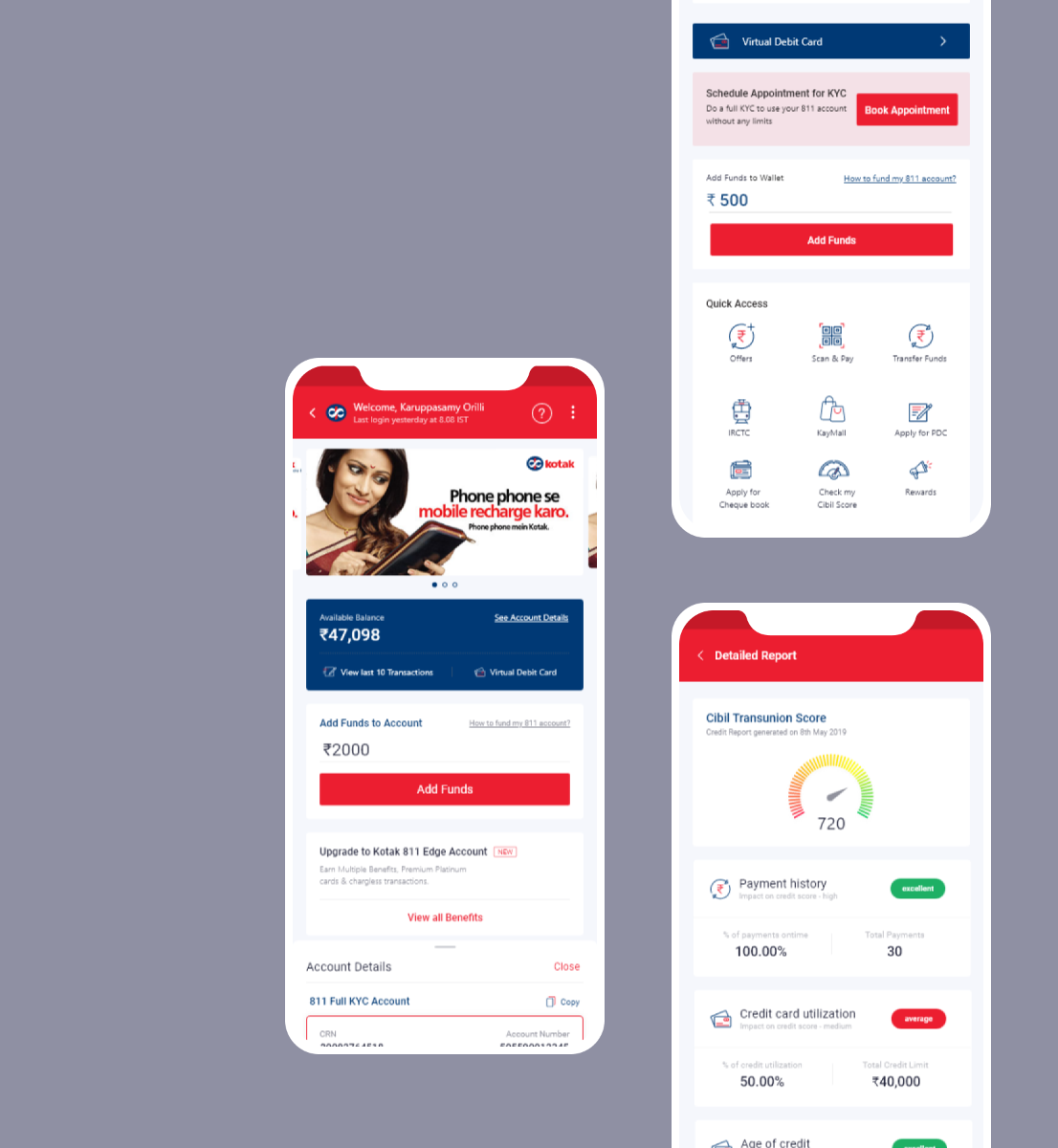
Banking and Fintech

Kotak Mahindra Bank
Designing a seamless user experience for Kotak 811 digital savings account

logo

News and Media

News Laundry
Reader-Supported Independent News and Media Organisation
arrow

Written by the Cartoon Mango engineering team, based in Bangalore and Coimbatore, India. We build AI-powered logistics platforms, route optimization engines, and supply chain automation systems for logistics companies, e-commerce businesses, and manufacturers across India.